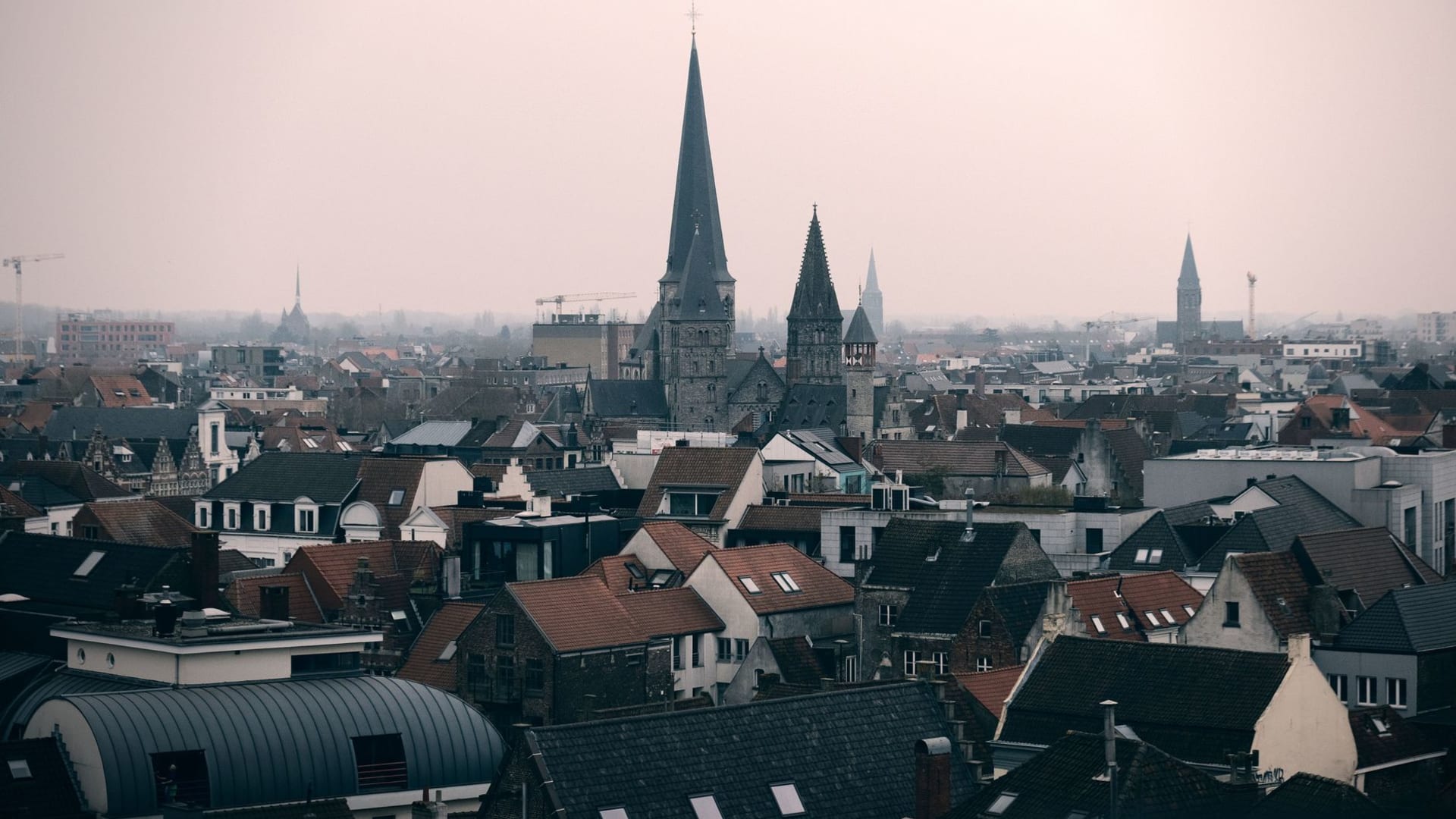
The N49 delivers you into Ghent's orbit at that particular hour when the light turns amber and the Belgian flatlands stop apologizing for themselves. Pull into the city and the medieval towers — Gravensteen, the Belfry, Sint-Niklaaskirche — appear not as monuments but as an unbroken architectural argument that this place was once the second-largest city north of the Alps, and has never quite forgotten it. There is a self-possession to Ghent that Bruges, with its tourist choreography, simply cannot replicate. The Graslei quayside, where guild houses have stood since the twelfth century, rewards those who arrive in something worthy of the setting. Check into Hôtel Harmony on Kraanlei, where canal-facing rooms frame the waterway as though the architects understood that a view here is not decoration — it is context. Ghent operates on Flemish time: dinner at ten, Trappist beer taken seriously, conversation about art that isn't performative. The car stays valet-parked. The city, for once, is best consumed on foot — but only after the arrival deserves it.
Where Flemish guild wealth endures in stone, water, and the unhurried confidence of a city that never needed to announce itself