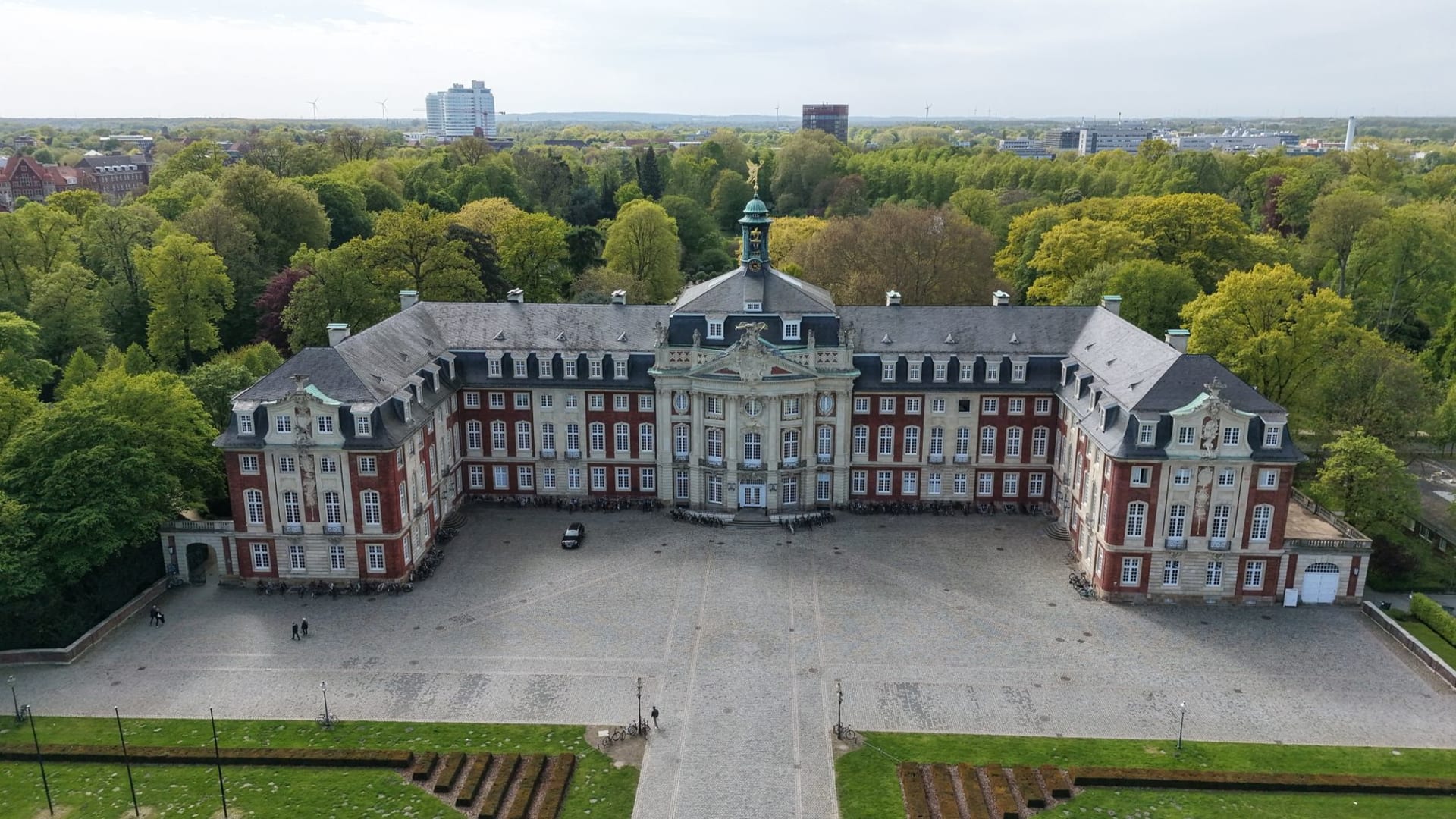
Münster does not announce itself — it accumulates. The medieval Prinzipalmarkt, its gabled arcades scrubbed to an almost austere perfection, sets the tone: a city that has always valued exactness over spectacle. It is precisely this restraint that makes the moment of departure so charged. Point the car west along the Münsterland Parkway, where the landscape opens into a low, horizontal world of water meadows, poplar rows, and moated Wasserburgen sitting heavy in still ponds. The road does not climb or curve dramatically — it simply extends, and at speed, that extension becomes its own kind of freedom. The Westphalian plain rewards momentum, not hesitation. Before or after that drive, Schlosshotel Harkotten offers the kind of accommodation that earns its title honestly: a Baroque manor with working estate grounds, where service operates at the pace of the household rather than the algorithm of a booking platform. Münster itself — cycling-obsessed, university-sharpened, quietly prosperous — is rarely discussed in the same breath as Düsseldorf or Munich. That omission is, for the discerning driver, the entire point.
Where centuries of civic precision meet open Westphalian roads and the quiet authority of castle country