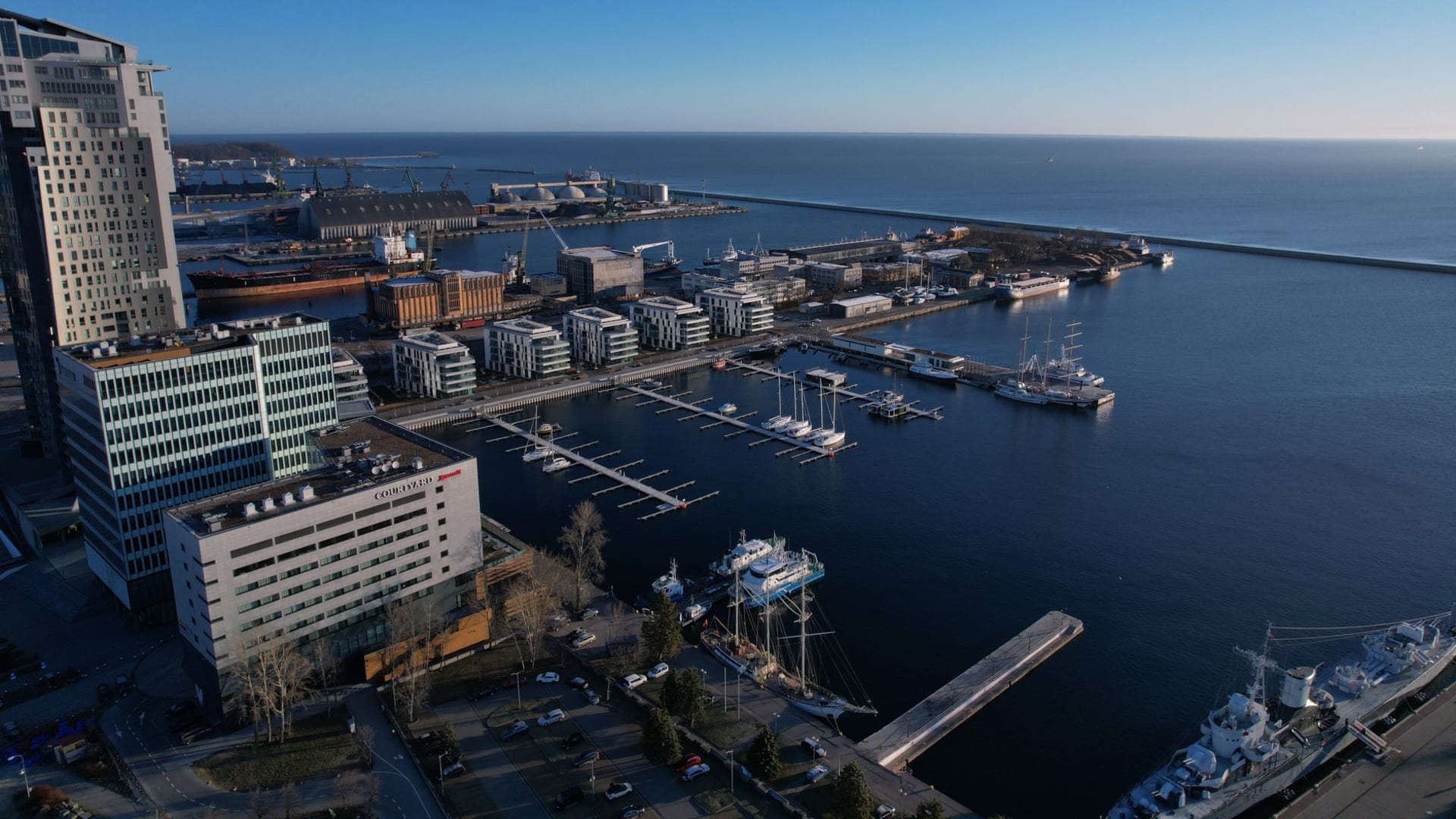
Gdynia operates on a different frequency than the rest of Poland. Built almost from scratch in the 1920s as a statement of national ambition, it never acquired the weight of history — only the momentum of purpose. That same forward energy defines its contemporary identity: private berths accommodating ocean-going yachts, helipads servicing corporate arrivals from Scandinavia and beyond, and a marina culture that is less about leisure than about transaction and taste. Marina Gdynia is the axis around which this world rotates — a working infrastructure for people who measure distance in nautical miles and time in charter windows. Arrive via the Droga Gdyńska coastal route and the city reveals itself as a sequence of considered architecture and salt-sharpened air, the modernist facades of Gdynia's Orłowo district sitting low against the grey Baltic horizon. The private clubs here do not advertise. The restaurants worth your attention change menus with the North Sea fishing calendar. What Gdynia offers — to those who understand it — is the rare combination of operational efficiency and genuine discretion. A city that knows exactly what it is, and has no interest in explaining itself to anyone else.
Poland's gateway to the Baltic, where shipbuilding legacy meets the quiet confidence of new maritime wealth