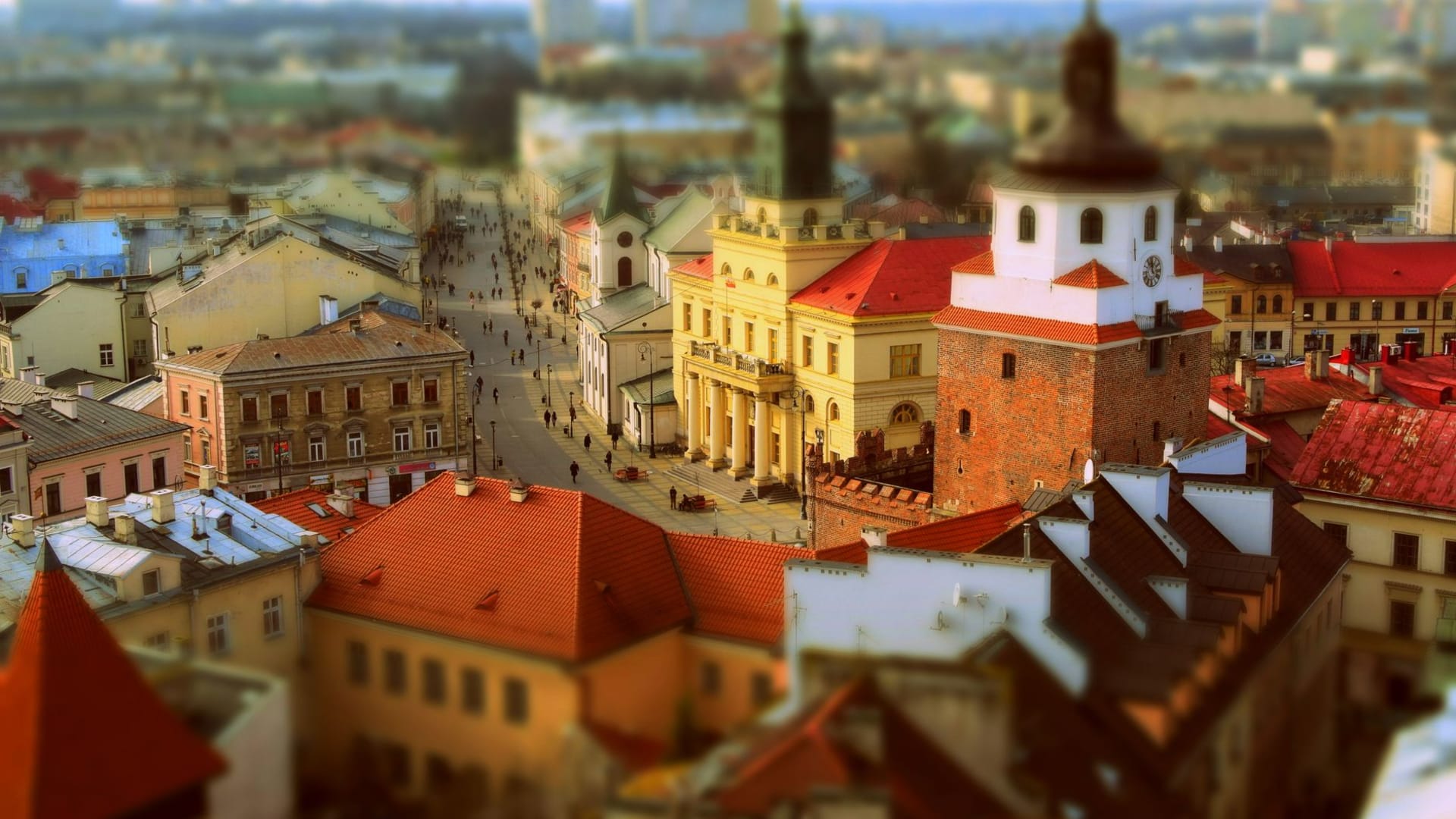
The Roztocze Upland holds its light differently in the late afternoon — chalk escarpments catching gold in a way that feels almost deliberate, as though the landscape has been composing this particular hour for centuries. Route 17 delivers you into Lublin not as a traveler arriving, but as something closer to a character entering a novel already mid-chapter. The Old Town rises ahead in layers: merchant facades in amber and ochre, arcaded courtyards worn smooth by six centuries of footfall, a castle that has outlived every ideology asked of it. There is a seriousness to Lublin that the more-photographed Polish cities have traded away. It rewards attention over instinct. Hotel Grand Lublinianka anchors the city's social register on Krakowskie Przedmieście, its restored interiors carrying the particular confidence of a place that never needed to announce itself. Dine late. The kitchen here takes the region's larder — forest mushrooms, game from the Roztocze, rye traditions older than the republic — and translates it without apology into something worth dressing for. Lublin does not perform. It simply continues, and invites you to keep pace.
Where Polish Renaissance architecture meets the unhurried art of refined Eastern European living