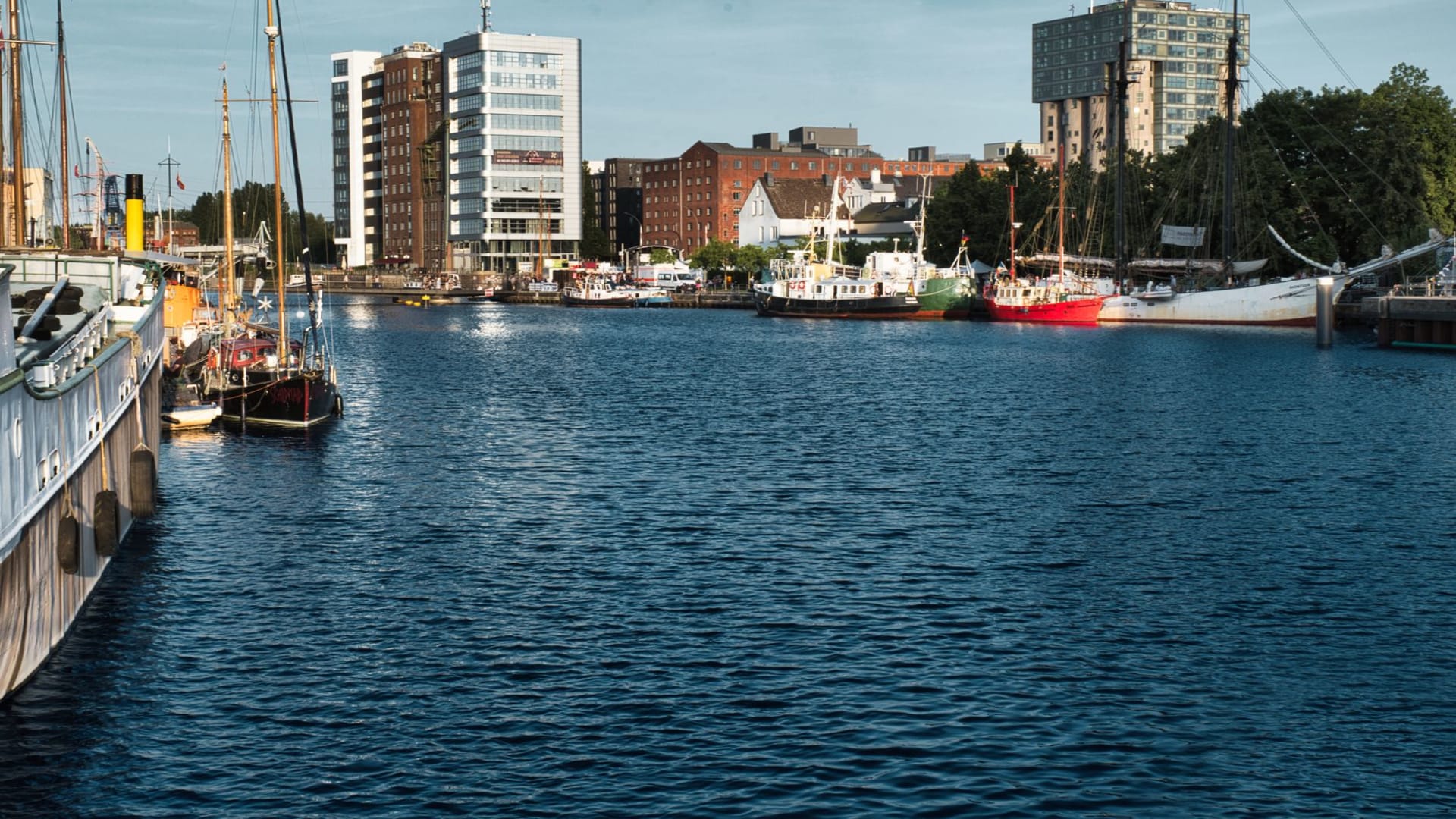
Night falls differently over Kiel. The Förde estuary catches the city's light and throws it back across the water in long, fractured lines — and it is into this that you arrive, the B502 coastal road unfolding ahead like a private runway. There is no theatrical crescendo here. Kiel operates with the quiet confidence of a city that has been building world-class vessels and hosting Olympic regattas since before most coastal towns found their identities. The waterfront after dark belongs to those who know where to look: the slipways lit from below, the white hulls of racing yachts moored at the Kieler Yacht-Club gleaming against the black water, the old naval quarter carrying its history without apology. Pull in along the Hindenburgufer and step out into air that carries salt and cool in equal measure. This is not a city that performs for visitors. It simply continues — purposeful, precise, uncomplicatedly itself. Which is exactly why arriving in something equally uncommon feels less like an indulgence and more like the only logical choice.
Where German engineering meets open water — Kiel rewards those who arrive with the right machine