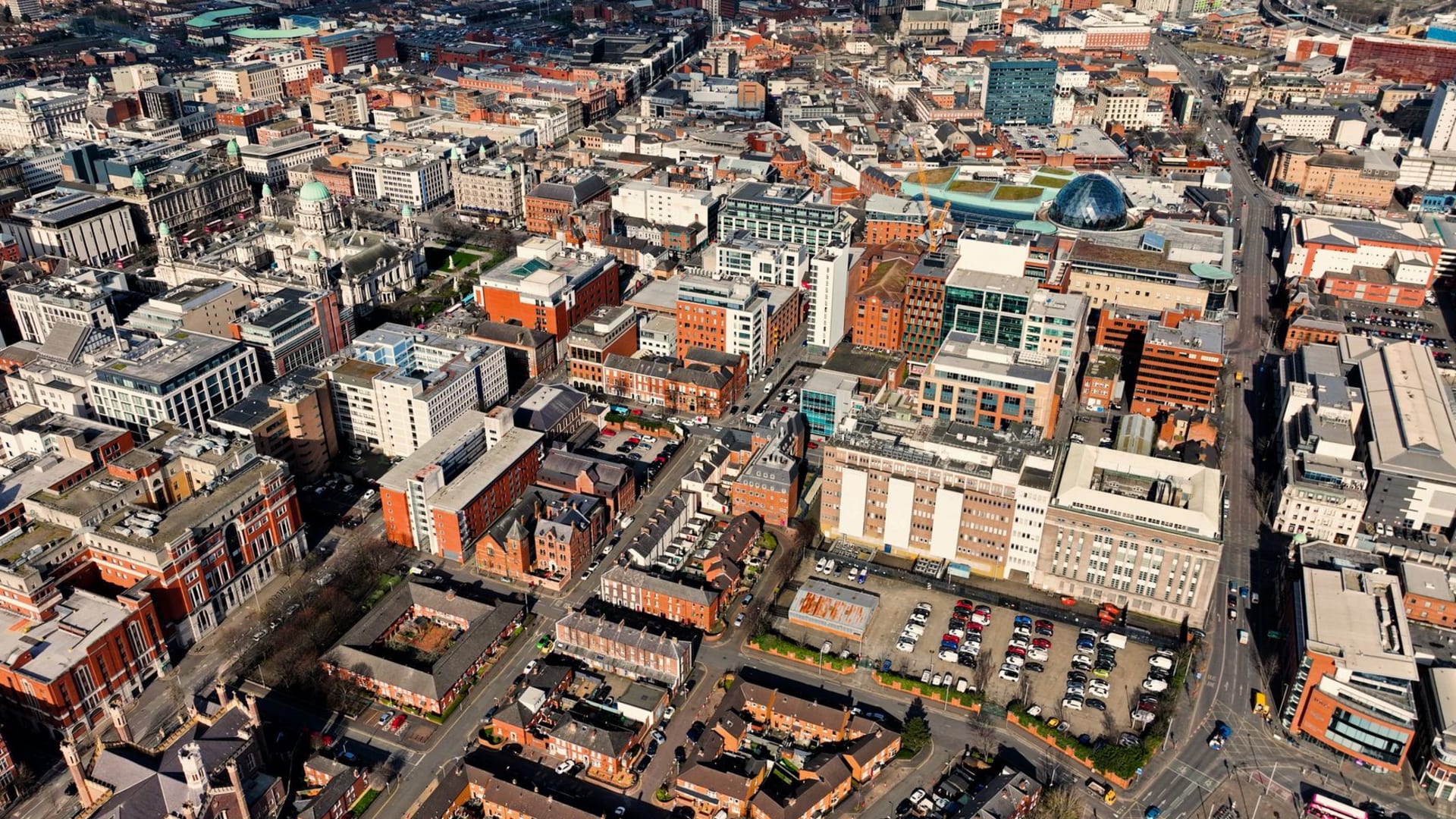
Pull into Belfast after dark and the city meets you on its own terms. The Harland & Wolff cranes — Samson and Goliath — loom amber against a graphite sky, monuments to a city that built the unsinkable and never quite let go of that audacity. There is weight here, and there is wit. The streets of the Cathedral Quarter pulse with a particular Belfast energy: sharp, irreverent, deeply literate. Check into The Merchant Hotel, a former Ulster Bank headquarters that trades Victorian grandeur for something cooler — cocktails mixed with the precision of a master distiller, rooms that feel inherited rather than designed. By morning, the A2 Antrim Coast Road calls. Point the bonnet north and let the route unfold: basalt cliffs, sea loughs the colour of pewter, and stretches where the road narrows just enough to make you feel the car beneath you. Belfast does not seduce quietly. It stakes a claim from the moment the city lights reflect off wet cobblestones — a place rebuilt with conviction, best arrived at fast and late.
Where shipyard mythology meets black-tie ambition — Belfast arrives with something to prove