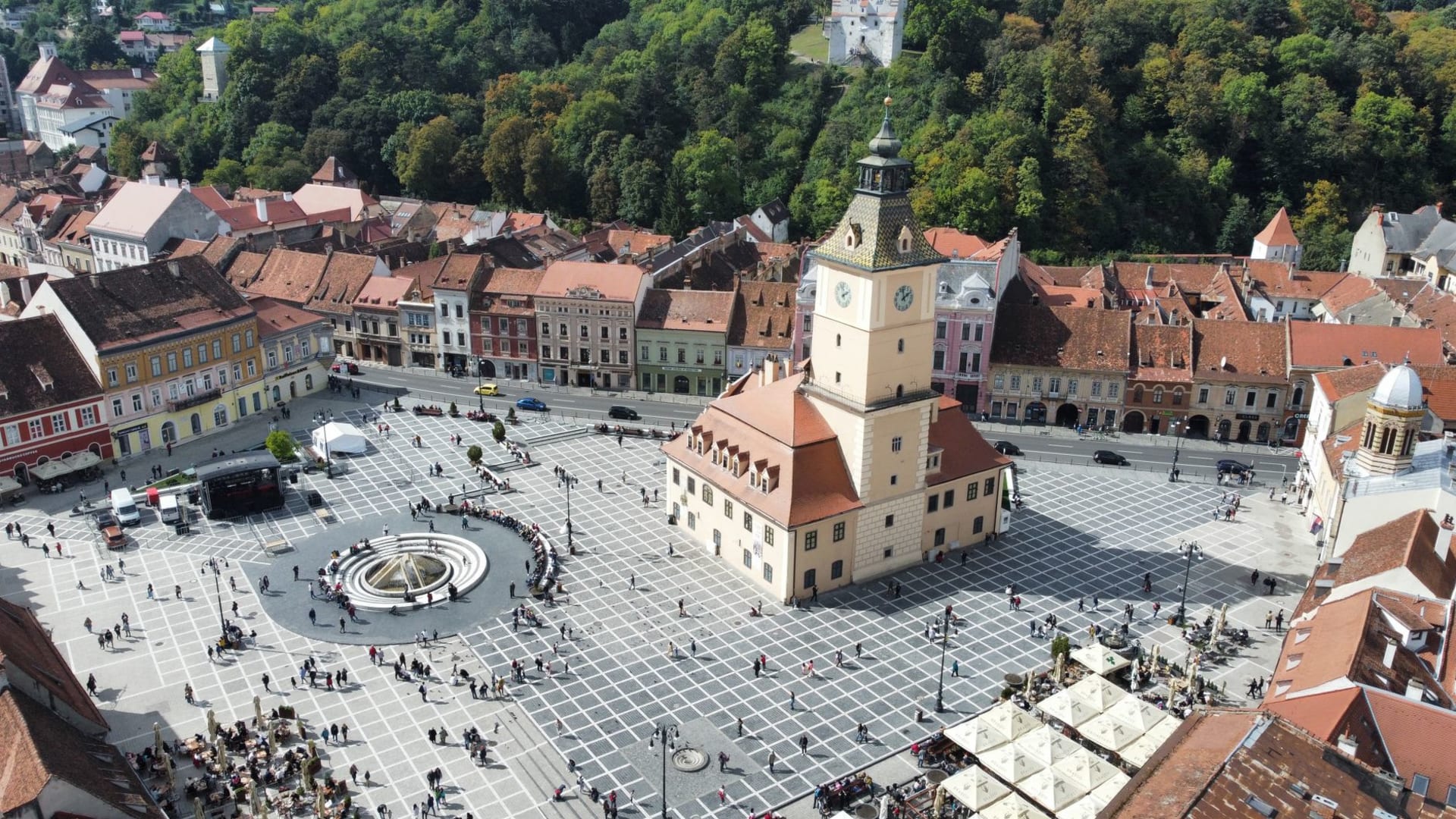
Brașov operates on two registers simultaneously — the compressed, cobbled intimacy of the Saxon old town and the raw, untamed scale of the Carpathians pressing against its northern edge. The historic center rewards those who move slowly: narrow lanes between 14th-century guild houses suddenly release onto Piața Sfatului, the old council square, where Casa Wagner Hotel occupies a patrician façade that has watched empires come and go. Stay here and the city's architectural character seeps in overnight. But Brașov is also a departure point for one of the continent's most serious roads. The Transfăgărășan Highway climbs south through glacial lakes and hairpin sequences that test chassis engineering as much as driver nerve — a road that only makes sense behind a machine with real intent. The tension between these two experiences defines the city's particular appeal: mornings spent tracing the Black Church's centuries of soot-darkened stone, afternoons where the road opens to altitude and horizon. It is a place that refuses to be decorative. The mountains are not backdrop — they are condition, shaping the light, the architecture, and the reason you came.
Where medieval stone and mountain wilderness demand a car worthy of both