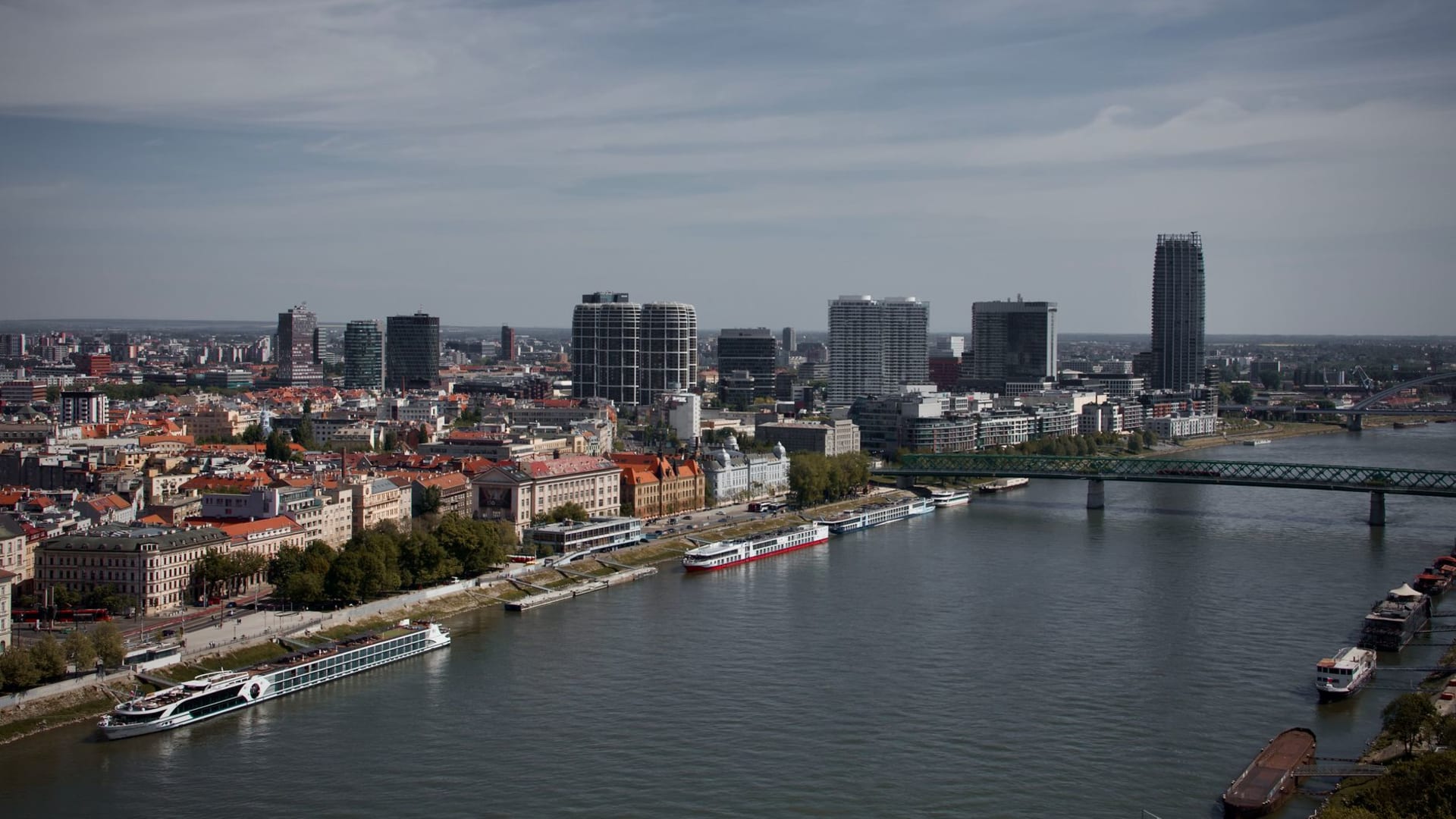
The Danube arrives before the city does. Approaching Bratislava along the Viedenská cesta at golden hour, the river catches the last light in long amber streaks, and the old town rises above the water with a composure that other capitals spend centuries trying to manufacture. This is a city that has never needed to announce itself. Pull up along the riverfront and the Kempinski Hotel River Park presents itself with the quiet confidence of somewhere that understands discretion as a form of luxury — floor-to-ceiling glass, a direct conversation with the Danube, and a level of service calibrated to guests who have stayed everywhere and remember almost nothing. Bratislava operates differently from Vienna or Prague. The streets of the old town are narrower, the pace more deliberate, the rewards less obvious and therefore more satisfying. A Lamborghini parked on Hviezdoslavovo námestie draws glances but no crowds — the city is too measured for spectacle. What remains is something rarer: a European capital that feels genuinely unhurried, where the architecture holds its history without performing it, and where arriving by car still means something.
Where Central Europe's most underestimated capital rewards those who arrive on their own terms